Conscious awareness goes beyond passive observation. It’s a deep, intentional state of being—where you actively engage with your thoughts, emotions, and experiences, moving past the automatic reactions of everyday life. This shift transforms how we perceive and interact with the world around us, inviting us to connect with our environment in a meaningful way.
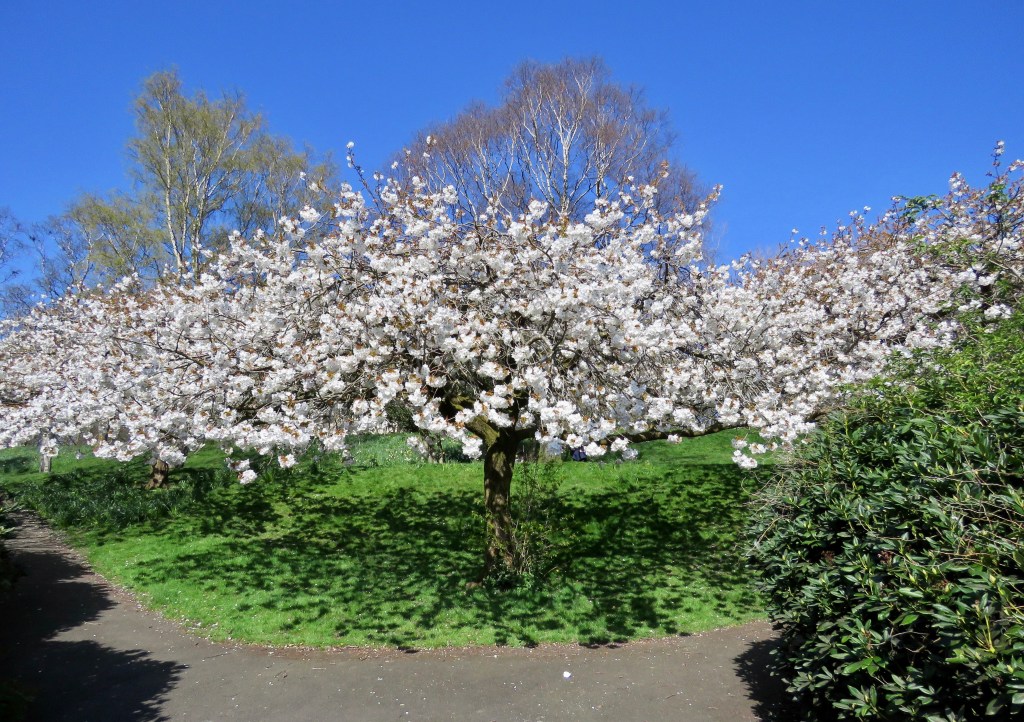
Our five senses—sight, hearing, taste, smell, and touch—automatically process external stimuli. But conscious awareness pushes us beyond these automatic responses. Take, for example, a tree. Your eyes might notice its shape, your hand may touch its rough bark, or you might catch a whiff of its blossoms. These are automatic, sensory inputs. However, conscious awareness invites you to go deeper, asking you to pause and reflect on your experience of the tree. Is it awe-inspiring, peaceful, or ancient ? By reflecting on this, you transcend basic perception and open yourself to a dialogue with the tree as a living entity—an engagement that acknowledges the tree’s life, its place in the world, and your connection to it.
This is not the overused idea of being “mindful of the present moment”—a term that has become diluted in modern culture. Recently, I noticed the phrase “Made Mindfully” printed on a machine-made plastic bag at a Tesco supermarket. The term “mindfulness,” once profound, has been watered down, stripped of its original depth.
The Commercialisation of Mindfulness
Mindfulness, in its original form, is a sacred practice, rooted in Buddhist teachings. It was Thich Nhất Hạnh, a revered Buddhist teacher, who introduced mindfulness to the West in the mid-1970s. (For those interested, I delve into his teachings and the Plum Village tradition in a previous post—HERE.)
However, these teachings of mindfulness took a sharp turn when one of his students, Jon Kabat-Zinn, restructured it into a secular stress-management program—Mindfulness-Based Stress Reduction (MBSR). In doing so, he removed its spiritual depth, turning it into a tool to reduce stress, disconnected from its Buddhist roots. This marked the beginning of mindfulness as a commodity, something to be sold and marketed.
Today, mindfulness is a billion-dollar industry. The digital app market alone has a forecast global value of $647 million in 2024. As the market has expanded, the spiritual essence of mindfulness has diminished. It’s now used in environments far removed from its original purpose. MBSR was adapted for use by the U.S. military to improve combatants’ “operational effectiveness”—in essence, making them more efficient in warfare, or as part of corporate strategies in “Mindful Finance” that focus on profit rather than compassion.
These developments stand in stark contrast to the original intention of mindfulness—to foster interconnectedness, compassion, and respect for life in all its forms.
Moving Beyond Mindfulness to Interconnectedness
So how does this shift from mindfulness back to conscious awareness relate to the broader idea of interconnectedness?
Everything in nature—seen and unseen—is connected. Each tree, rock, and animal forms part of a greater, living system. This interconnection is a core teaching in many spiritual traditions, including Buddhism. In Buddhism, the principle of *esho funi* emphasises the oneness of self and environment – and in this case, “environment” means the entire universe, not just the place we call work or home.
When you approach a single tree with conscious awareness, the relationship becomes one of mutual engagement. You and the tree share space, energy, and life. The tree offers oxygen, shelter, and beauty, while you protect and nurture its environment. This recognition fosters a sense of responsibility and respect, a realisation that we are all part of an ongoing dialogue with nature, influencing and depending on one another.
When your body eventually returns to the earth, it nourishes the soil, providing sustenance for the tree’s roots. This is not a symbolic relationship—it is a literal, natural cycle, demonstrating the deep interconnectedness of all life.
Engagement Without Ego
When you engage in this way, you set aside ego-driven awareness—the idea that nature exists for you, for your personal experience. Instead, you embrace a shared, reciprocal relationship. Neither you nor the tree stands at the centre of this dynamic; rather, you are both integral parts of a larger, living reality.
Approaching our world with conscious awareness is not about using nature for personal gain or solace—it’s about coexisting with it. It’s about realizing that you are not separate from the tree, the soil, or the sky. This recognition nurtures a more compassionate, harmonious view of the world, where nature becomes something to respect, honor, and protect.
Conscious awareness is not passive—it is active, engaging, and alive. It calls on you to be part of the world, not as a spectator but as a participant. Nature, in this view, isn’t just a backdrop to your life—it’s a living presence with which you are deeply intertwined.
Cultivating this type of awareness helps build a richer, more meaningful relationship with the world around you. You begin to see the world not as something to be used, but as something to engage with, appreciate, and nurture.






 Cosmic Consciousness
Leave a comment